


 Apple Podcasts
 Spotify
 Amazon Music
 iHeartRadio
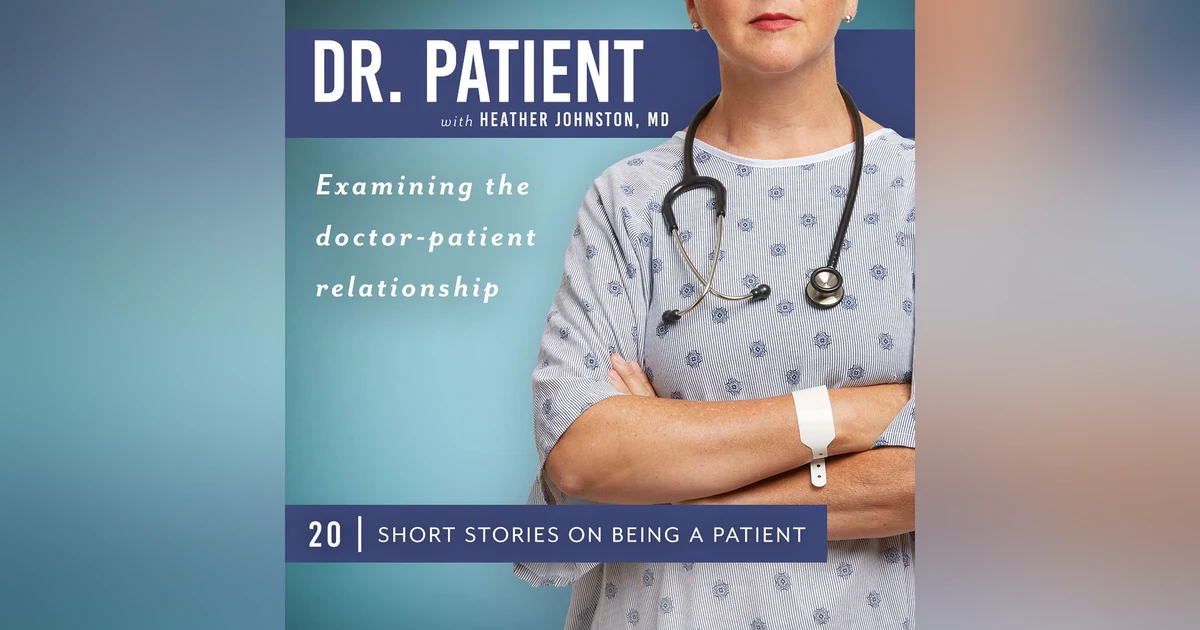
 Ep 20 Short Stories on Being a Patient
Date: 5/28/24
Name of podcast: Dr. Patient
Episode title and number: 20 Short Stories on Being a Patient
Episode summary:
I have this never-ending quest to help doctors and patients understand each other better. This collection of short stories on what it's like to be a patient are meant to do just that. These are a few years old - I wrote them when I had breast cancer in 2020-2021 and went through surgery, chemotherapy and radiation. Hope they paint a realistic picture for you.
Guest(s): none
Key Terms: none
References: none
Heather (00:02.446)
Hi, today I'm reading from my journal from a few years ago when I had breast cancer. It was an incredibly tough time. It was the second time I was diagnosed with cancer in my lifetime, so I was filled with dread of both the unknown and the known, because I remember what it was like the first time and I did not want to go through that again. Unfortunately, even though my cancer was only stage one, meaning the very least amount of cancer that can be found, I had a very aggressive cell type, which means that even though it was caught really early, I still had to have chemotherapy and radiation for it in addition to some initial surgery. So I spent a lot of time in the hospital again, in clinics and in doctor's offices over those nine months. And I used to write little blurbs to myself while I was there. For a while I forgot about them, but then I was cleaning up my hard drive a couple of weeks ago and I found this folder called medical writings. And I had no idea what it was because I had forgotten because of all the chemotherapy in my brain. But it turns out there's a bunch of short stories in there that I wrote.
So I'm sharing them with you today in my never-ending quest of trying to help people, including doctors and other health professionals, understand what it's like to be a patient. And a lot of the stories sound complainy, but that's partly because it feels good to do that when you're sick with cancer, but also the healthcare system is messed up in like a thousand ways. And as a reminder, most of that has nothing to do with your doctor. Doctors are in many ways as beholden to a broken system as you are: wait times, communication, snafus, administrative errors, or the system, not the doctor.
Story 1, It's Lonely Out There
Being a patient is such an incredibly isolating experience. Serious illness brings families together, lures neighbors and friends out of their busy lives to offer help. Another lasagna? Thank you. And has kids doing household chores that they normally wouldn't do, all great help for sure. During the day in the hospital, plenty of visitors kept my mind off the dire nature of my reason for being there. Food, flowers, gifts visitors had arrived allowed me to delve into something else, not think about what my attention was supposed to be on. But generally the people go home at some point and the ensuing loneliness has no depths. No matter how hard my family or friends try to understand what it's like to be there, to be feeling the way that I feel, they simply cannot. They don't understand how slowly the minutes tick by at night in a hospital. Changing channels from one crappy show to another, reading the same paragraph 10 times in my book because the concentration just isn't there, staring blankly at a cream -color hospital wall that could be any hospital in any city. I feel so small. I feel like one little dot in this huge building is if I could get swallowed up in it and no one would even notice. And I know that all up and down this hallway, the other people are lonely too. We're all here together. And, alone.
(03:18.958)
Story 2, The Never-Ending Forms
Between various departments and appointments at the big hospital over the last year, I've literally filled the same intake form out seven times now. How often do they think that people's information changes? Or do they just shred it every time I leave there, like does the paper need to be fresh? Also, there's laws about how doctors' offices and hospitals need to have patients sign some documents to confirm that they understand all about HIPAA. That's those privacy laws and the billing practices and all that. Back in the paper days, they'd pass over a ridiculously long document and ludicrously small font that no one could really read. And I usually made a show of glancing at it for five seconds as if I was actually taking something in and then blindly signing it and pushing it back. But now that most of those forms are electronic, the front desk person turns around a digital signature pad and asks me to sign it without even telling me what I'm signing anymore. If I ask, they'll give me a one -liner on the gist of the document. I mean, I can ask to see the whole thing, I'm sure, but will I? No, I'm just going to sign away.
Story 3, Charts, Charts Everywhere
I have five doctors that I'm seeing right now, one primary and four specialists. Between those five, they use four different electronic health record systems. Thank goodness that I'm computer savvy enough to understand this and follow along with all four systems, but geez, good for the system, bad for the patient. I have four different logins for four different systems. And I worry that at some point, one of those systems will become obsolete or that doctor will move on to a new electronic health record platform. So on top of maintaining all the various systems, I've also taken to copying all my test results and notes from each system onto my own computer, just in case. It's a lot of work to be a patient. And I can't imagine how the older generations who did not come up on computers are handling all this. Everyone be kind to your elders and see if they need help with this.
(05:23.886)
Story 4, Busiest. Waiting. Room. Ever.
I think I was in the busiest waiting room ever today as I waited to see the specialist. I took the only seat available nearest to the front desk. There seemed to be only a couple feet between me and the desk. Isn't there some kind of minimum regulatory distance like the three feet that are required for hallways in most houses and buildings? Well, I know now what every single person is here for, since I can literally hear every word that the front desk receptionist says to each person. Insurance woes, symptoms, names, addresses, phone numbers. I even know who's gonna give a urine sample shortly and which restroom they're going to use. This does not seem right.
(06:08.27)
Story 5, Fear Of The Known
I have to have a procedure at one of the big hospitals with a specialist in a few weeks, and I'm honestly a bit scared. Not about the procedure itself or any pain that might ensue during recovery. I'm scared about potential mistakes because as a former doctor, I've seen many over the years when I was practicing. Will someone not notice my really important diagnosis of a heart problem and give me too much IV fluid? I've seen that happen. Will the pre -op nurse give me the wrong advice about whether I should or should not take my cardiac meds the morning of surgery? Seen that happen. Will they operate on the wrong side? Seen it. I guess it's starting to sound like I went to a shit program for training, but I didn't. I actually went to one of the best in the country. It's just that there's a lot of cooks in the kitchen when it comes to patient care today, especially in this system and people... It's just that there's a lot of cooks in the kitchen when it comes to patient care, especially in today's system. And people don't always communicate as carefully or thoughtfully as they should. And so I'm scared.
Story 6, Is The Doctor Even In?
I had a question for my specialist, I know another specialist, this is my life, a while back, related to side effects I was having from some of my medications. I was wondering whether I needed a different dosage. I sent my message through the electronic medical record system as directed and sat back to wait. The next morning I got a call from her nurse who answered a question that was similar to what I had asked but not exactly enough. So I had a follow -up question. She said she'd have to get back to me. She called back the next morning and answered my original question exactly this time, but then it led me to having another question for follow -up that she had not thought to bring up related to a different problem that could ensue if we actually change the dosage. And she couldn't answer that question herself either, so she had to get back to my specialist and then get back to me. She called me again the next day at dinnertime, and we finally had the situation settled. So it took four days to just get through a problem that I had to talk to my doctor about, all the while suffering through symptoms that made me unable to drive a car, unable to stay standing up for too long. Four days, and I'm a doctor. How long would it have taken a non -doctor patient? Actually, it's probably four days also. The point is, it would have been much more efficient if the specialist had just called me back directly. That's not their fault, because I don't think they actually have time to call me during the day, but it really feels as if doctors are off limits to their own patients these days.
Story 7, The Human Donut Hole
There's nothing quite like being inside a CT or MRI scanner. The staff bundled me up like a mummy with foam pieces tucked in all around me and wrapped me in blankets and put noise canceling headphones on me. I wonder if this is what a tanning booth is like. I've never been in one. The sound is so loud and not peaceful humming. It's a deep thumping circling around your head and you can hear it really loudly through the noise canceling headphones, though it was surprisingly hard to stay awake even with said booming around my head and weird foam bits all around me. I fell fast asleep and had a great nap. At least it was rhythmic.
Story 8, Reluctant Loudmouth
I went to, yes, another specialist a few days ago. And when his nurse was checking me in, she used a blood pressure cuff for an obese adult. It was far too big for me. And I knew it would produce an untrue blood pressure result. I couldn't keep quiet, so I pointed it out to her. I think that cuff is probably too big for me, I said, in the friendliest voice I could think of. She replied, well, it's the only one I have. I decided to keep pushing it. Well, let's just not do the blood pressure since the result won't be reliable. Her reply, it'll be fine. Straight from there, I was ushered down the hall to another room, which I thought was gonna be the exam room, but instead turned out to be an X -ray room. The technician took me in and started asking me to confirm my name and birth date. And I said, I'm not sure what I'm in this room for. And she answered, you have to have an X -ray before you see the doctor. So I asked, how does he know if I need one yet if he has... So I asked, how does he know if I need one if he hasn't seen me yet? And she said, all his patients get them. I answered, well, I think I'll wait to talk to the doctor to see if I need one, but thank you. Between these two interactions occurring with only a few minutes between them, I'm pretty sure that they were commiserating about me in the back as a troubled patient. Would a non -medical or non -doctor patient feel comfortable pointing these things out or even asking questions?
Story 9, I Am My Own Doctor
I went to see a specialist last week about a problem that I've been seen on and off for for years across three different medical centers. I knew that it would take him too long to read through all the reports and the summary. So I created a cover sheet to summarize all the findings and test results. I was literally acting as my own doctor, adding to my own medical record. And it was a hit. I recommend that everyone do this to the best of their ability or if you're not sure of your diagnosis or your...I recommend that everyone do this to the best of their ability. If you're not sure of your diagnoses, ask your primary care doctor if they'd be willing to do something like this for you. They'll probably tell you that something like that already exists in your chart called a problem list or a summary or something, but it'd be nice for you to have a version of it yourself that you understand. Some of your providers will say yes and many will say no, but it's okay to ask.
Story 10, It's The Small Things
When I was a physician, I saw 20 to 30 patients a day. As a patient, I usually see one doctor in one day. So every little detail about the visit stands out and is apparent to me. Little things like having the front desk clerk mispronounce my name every time irks me to no end. It's Johnston with a T, like Johnson, but just add a T in. I say every single time that I'm there. The T is right there, and I'm pretty sure that literacy and reading ability is a requirement for that job. So why did they mispronounce it? Laziness, don't care, don't think it matters? Well, it matters. When they mispronounce my name, it makes me feel like...Well, it matters. When they mispronounce my name, it makes me feel like they don't know me and like they'll miss something else that's important. Little things like telling me how long I'll probably sit in the exam room waiting for my doctor help me prepare mentally. Is it 45 minutes and I should keep my sweater on and read a magazine? Is it five minutes and I barely have time to change? Or how about not leaving me for 10 minutes in stirrups and alone in the room while I wait for the doctor to come in? The AC is on way too low for that. Why are those simple courtesies so important? Many physicians would say that they're not. You're there to see your doctor and get medical care, so none of that stuff matters, but that just doesn't feel right. It's called a doctor -patient relationship for a reason. We're all taught in medical school not to make that overly blatant error of referring to a patient by their room number or diagnosis, like room 482 has a headache or the aortic aneurysm has nausea. These seem obvious, right? So why when I'm in an outpatient office can't someone read off my name correctly? It oozes indifference. You're asking me to place my confidence in you and trust that you'll see all the hidden nuggets of important information, yet you can't get the small details right, which makes me nervous that you won't get other things right either.
Heather (14:30.414)
Those are some of my patient stories for now. Stay tuned later in the season for my short stories on being a doctor. If you haven't signed up for my newsletter yet, this is a good time to do that at www.drpatientpodcast.com. I send one a week and I include one helpful tip per week as a thank you for subscribing. And as always, thanks for listening.